
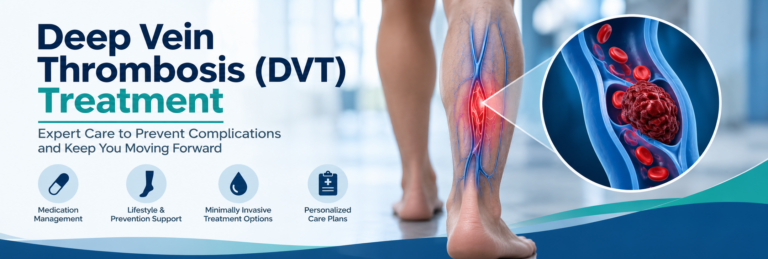
Deep Vein Thrombosis (DVT) is a condition in which a blood clot forms in a deep vein, most commonly in the legs. Common symptoms include leg pain, swelling, heaviness, warmth, and skin discoloration. If left untreated, the clot can travel to the lungs and cause a potentially life-threatening condition called pulmonary embolism.
Interventional Radiology offers advanced, minimally invasive treatment options for selected patients with acute or extensive DVT. Using image-guided catheter-based techniques, specialists can directly target the clot to help restore blood flow, relieve symptoms, and reduce the risk of long-term complications such as chronic leg swelling and post-thrombotic syndrome.
Key Benefits
- Minimally invasive, image-guided treatment
- Accurate diagnosis and treatment planning
- Helps restore normal blood flow
- May reduce leg pain and swelling
- Lower risk of long-term vein damage
- Faster recovery and shorter hospital stay
- Personalized treatment based on clot location and severity
Treatment Options
Treatment may include blood-thinning medications (anticoagulation), catheter-directed thrombolysis, mechanical thrombectomy, or a combination of endovascular techniques, depending on the patient’s condition.