
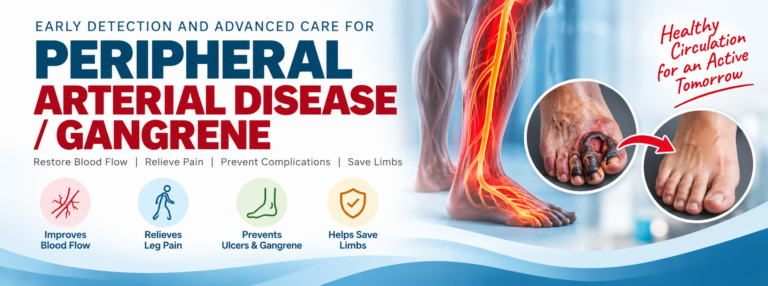
Peripheral Arterial Disease (PAD) is a condition in which narrowed or blocked arteries reduce blood flow to the legs and feet. Reduced circulation can cause pain while walking, coldness, numbness, skin changes, slow-healing wounds and, in advanced cases, tissue damage or gangrene.
Image-Guided Evaluation & Treatment
Interventional radiology can help assess the affected blood vessels and, in suitable patients, restore blood flow using minimally invasive endovascular procedures. Treatment may include angioplasty, stenting and other catheter-based techniques, depending on the location and severity of the blockage.
Key Symptoms
- Pain or cramping in the legs while walking
- Coldness or numbness in the feet
- Non-healing wounds or ulcers
- Changes in skin colour or texture
- Weak or absent pulses in the foot
- Tissue damage or gangrene in severe cases
Treatment Options
- Peripheral angioplasty to widen narrowed arteries
- Vascular stenting to help maintain blood flow
- Catheter-based treatment for selected arterial blockages
- Assessment and management of critical limb ischemia
- Treatment planning aimed at improving circulation and supporting limb preservation