

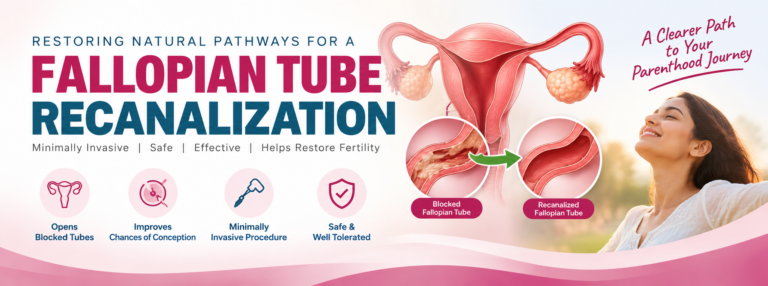
Fallopian Tube Recanalization (FTR) is a minimally invasive, image-guided procedure used to treat certain types of blockage in the fallopian tubes, which can be a cause of infertility. The procedure uses a thin catheter and specialized imaging guidance to gently open the blocked portion of the tube, without the need for major surgery.
How the Procedure Works
- Performed under X-ray/fluoroscopic guidance by an interventional radiologist.
- A thin catheter is carefully introduced through the cervix into the uterus.
- Contrast dye is used to identify the location of the blockage.
- A very fine catheter or guidewire may be passed through the blocked segment.
- The blockage is gently crossed or cleared when technically possible.
- Tubal patency is confirmed with contrast imaging.
Potential Benefits
- Minimally invasive approach
- No abdominal incision is usually required
- May restore the passage through a blocked fallopian tube
- Generally involves a short procedure and recovery period
- May provide an alternative to more invasive surgical approaches in selected patients
Who May Be Suitable?
Fallopian Tube Recanalization may be considered for women with proximal fallopian tube blockage, particularly when the blockage is suitable for catheter-based treatment. Evaluation of fertility history, imaging findings and other factors is important before deciding on treatment.
Important: FTR is not suitable for every type of tubal blockage and does not address all causes of infertility. A detailed evaluation by a fertility specialist and interventional radiologist helps determine whether the procedure is appropriate.