

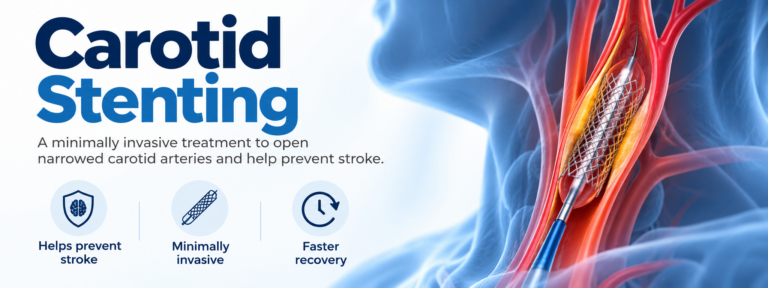
Carotid artery stenting is a minimally invasive endovascular procedure used to treat significant narrowing of the carotid arteries, the major blood vessels that supply blood to the brain. Narrowing, often caused by the buildup of plaque, can reduce blood flow and may increase the risk of stroke. In selected patients, carotid stenting can help restore and maintain blood flow through the affected artery.
During the procedure, a thin catheter is introduced through a blood vessel and carefully guided to the narrowed portion of the carotid artery using advanced imaging. A small expandable stent is then positioned across the narrowed segment to support the artery and keep the blood vessel open. In appropriate cases, embolic protection techniques may be used to help reduce the risk of plaque or debris travelling toward the brain during treatment.
Key Benefits & Features
- Minimally invasive, catheter-based treatment
- Helps improve blood flow to the brain
- Stent placement helps keep the narrowed artery open
- Performed under advanced image guidance
- May be considered for selected patients who are at increased risk with conventional surgery
- Treatment is planned according to the location and severity of narrowing, symptoms, vascular anatomy, and overall health
- Can be an important part of a comprehensive stroke prevention strategy in suitable patients
Who May Benefit?
Carotid stenting may be considered for selected patients with significant carotid artery narrowing, particularly when symptoms such as a transient ischemic attack (TIA) or stroke are associated with carotid disease, or when other clinical factors make stenting an appropriate treatment option.
Early diagnosis and personalised treatment planning can play an important role in reducing the risk of stroke associated with carotid artery disease.